The jury convicted Flores of attempted premeditated murder and found he personally and intentionally discharged a firearm causing great bodily injury (Penal Code § 12022.53(d)), which carries with it a twenty-five-year to life sentence enhancement. Before sentencing, Flores admitted three prior felony convictions for carjacking, attempted murder in 1999 and manufacturing a weapon in prison in 2007. Both the carjacking and attempted murder qualified as “Strikes” under the Three Strikes Law. Flores also admitted that he served a prior prison term for the carjacking and attempted murder convictions.
Before sentencing, Flores filed a motion to strike or reduce the gun enhancement under Senate Bill 620. The judge denied the motion because of the violent and callous nature of the shooting. Flores was then sentenced to a total of 69 years to life in state prison after striking the prison prior and prior serious felony enhancements.
 Riverside Sheriff's Emblem
Flores then appealed his sentence to the Fourth Appellate District in Riverside on several grounds. This article will limit its scope to his argument that the judge erred by refusing to strike or reduce the gun enhancement and in doing so, abused his discretion.
On this ground for appeal, the Fourth Appellate District began its analysis by noting that a court may dismiss or strike a gun enhancement “in furtherance of justice” (Penal Code § 1385) under Penal Code § 12022.53(h); see also People v. Pearson (2019) 38 Cal.App.5th 112, 116.
The appellate court explained that it reviews the denial of a motion to strike an enhancement for abuse of discretion and will not reverse the ruling unless it “is so irrational or arbitrary that no reasonable person could agree with it.” Pearson, supra, 38 Cal. App. 5th at 116; People v. Carmony (2004) 33 Cal. 4th 367, 375, 377.
In reviewing the facts of the case, the appellate court noted that Flores had only been released from prison for attempted murder onto parole about one month prior to shooting Manley G. The court also noted that but for sheer luck, Flores’ shot did not kill Manley G.; had it been a centimeter to either side of where he was shot in the neck, Manley would have died. Moreover, the shot was at close range and Flores literally drove away after shooting Manley G. over what was really quite a minor incident that did not even affect him or his property.
The appellate court was somewhat sarcastic in addressing Flores’ argument that other judges had stricken the firearm enhancement in murder cases and therefore, the trial court was punishing him more harshly than in cases where there was a greater harm. The appellate court tersely responded to this argument by stating “The law does not reward sheer luck.”
We bring this summary to the reader’s attention to show how a court will look deeply into the case facts, something we believe many of our clients may not really want.
The citation for the Fourth Appellate District Court ruling discussed above is People v. Carl Ray Flores, Jr. (4th App. Dist., 2021) 63 Cal. App. 5th 368, 277 Cal. Rptr. 3d 698.
For more information what a judge can consider in a Senate Bill (SB) 620 petition, please click on the following articles:
 Greg Hill & Associates Home















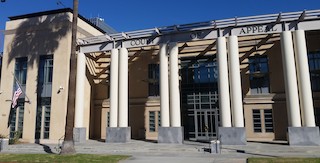 4th Appellate District Div 2 Riverside
 Your Privacy Choices Cookie Policy Manage Cookies