Horn then began punching Di Luigi and they began struggling over the walking stick, which Di Luigi eventually got and threw into the bushes. As Di Luigi then was walking away, Horn then passed him up on the walking trail, stopped, turned around and pulled out a gun.
Di Luigi told Horn to put away the gun and Horn’s wife also told him the same thing, but Horn fired a shot into Di Luigi’s chest. Di Luigi then called 911 and help arrived. He was airlifted into a local hospital.
The Orange County District Attorney’s office filed charges of attempted murder against Horn, but the jury acquitted him of that charge and instead convicted him of the lesser include offense of attempted voluntary manslaughter. The trial court judge, Edward Rogan, then sentenced Horn to nine years in state prison, where he very well may pass away.
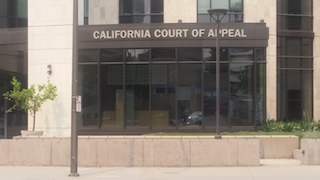 Fourth Appellate District CA Court of Appeal Santa Ana
On appeal to the Fourth Appellate District in Santa Ana, Horn only made one argument. He alleged that the district attorney misstated the law on self-defense in closing argument. While admitting that Horn’s spinal problems were relevant in determining whether he had an honest subjective belief in the need for self-defense, the prosecutor told the jury that defendant’s spinal problems had no bearing on whether any such belief was objectively reasonable, which is one of the requirements for self-defense.
The Fourth Appellate District agreed with Horn that this argument to the jury was improper, however, it found that the trial court judge’s curative jury instruction on this issue was “sufficient to disabuse the jury of the incorrect impression left by the prosecutor’s statements.”
The Fourth Appellate District’s further explanation was, we think, remarkable. It described how the trial court, in prefacing its recitation of jury instructions, told the jury that it was “not uncommon for attorneys to inadvertently misstate the law during their closing remarks.” However, the trial court told the jury that he (the judge) was the final arbiter on all legal issues, “so if the attorneys said anything that conflicted with the court’s instructions on the law, the jurors must disregard their attorneys’ statements and follow the court’s instructions.”
While we understand this attempt by a trial court judge to explain the significance of jury instructions, we think the Fourth Appellate District went too far in downplaying the significance of the prosecutor’s arguments.
We think jurors regard the prosecution with greater trust and respect, generally, than defense counsel, so the arguments of the prosecution are far more persuasive and accepted by the jury. When the judge is introducing jury instructions, most jurors have already made up their mind.
Instead, we think this appellate opinion puts the issue on a slippery slope. In the next case, will the judge also be able to cure the prosecution’s misstatement of the law? Why then have any rules on closing arguments? Just rely upon the judge to fix it in his presentation of jury instructions. This is not, we believe, how trials should proceed. Instead, both defense counsel and the prosecution must be held to the highest ethical standards and that includes stating the law correctly. The stakes are too high to proceed in any other casual way.
The citation for the Fourth Appellate District Court ruling discussed above is People v. Junior Horn (4th App. Dist., 2021) 63 Cal. App. 5th 672, 277 Cal. Rptr. 3d 901.
For more information about self defense, please click on the following articles:
 Greg Hill & Associates Home















 Santa Ana Courthouse
 Your Privacy Choices Cookie Policy Manage Cookies