If one is sentenced to a determinate sentence (not indeterminate or life), that person is eligible for a Youth Offender Parole Hearing after completion of 14 years in custody, or during his or her 15th year in custody.
Youth offenders sentenced to life with the possibility of parole with a controlling offense term of less than 25 years to life are eligible for a Youth Offender Parole Hearing after 19 years of custody, or during his or her 20th year in custody.
Inmates sentenced to a controlling offense term of twenty-five years to life or longer (i.e. 30 years to life, plus 10) are eligible for a Youth Offender Parole Hearing after 24 years of custody or during the 25th year of custody.
Inmates who committed their controlling offense when under age 18 and who received a sentence of life without the possibility of parole (LWOP) are eligible for a Youth Offender Parole Hearing after 24 years in custody, or during the 25th year in custody. This is a new provision, made possible through the passage of Senate Bill 394.
Time in custody includes all time in juvenile hall, jail, a mental health facility and/or CYA.
Six years prior to a parole hearing, the inmate will be scheduled and have a “Consultation,” which is a one-on-one meeting with a person from the Bureau of Parole Hearings. At this meeting, the representative of the BOPH will tell the inmate what they need to do to be ready for parole and their parole hearing. The Consultation will be scheduled automatically. One does not need to request it. The inmate is not entitled to have an attorney present at the Consultation (but one can have an attorney at the Youth Offender Parole Hearing, either appointed or privately retained).
Interestingly, one can waive the right to a Youth Offender Parole Hearing for 1, 2, 3, 4 or 5 years. To do so, one must submit a signed Form 1101 no later than 45 days prior to the scheduled hearing date.
One can also stipulate that one is not ready for such a hearing and ask to continue it 3, 5, 7, 10 or 15 years later. Such a stipulation, however, is considered an admission that one is “unsuitable” for parole and one must explain to the Board of Parole Hearings (BOPH) why one is “unsuitable” for parole.
Lastly, one can postpone such a parole hearing, but this is usually for three to six months.
For more information about Youth Offender Parole Hearings and state court habeas proceedings, please click on the following articles:
 Greg Hill & Associates Home















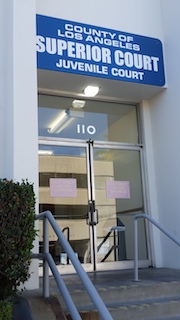 Juvenile Court Sign by Inglewood Juvenile Court
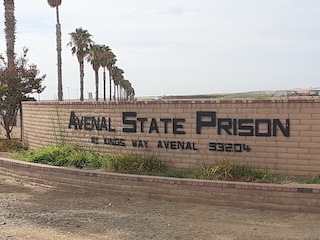 Avenal State Prison
 Your Privacy Choices Cookie Policy Manage Cookies