The call we usually receive is from a family member who tells us, “he says they are not counting his credits right." He was told that the person lost the ability to earn extra custody credits for a period of time due to a behavior issue and the caller believes the period of time ended.
To get to the hard facts on these possible problems, we need to have in our hands:
In other words, we need to evaluate if there are pre-sentence credit errors, in-prison credit errors, or both. We also need to know if an error was committed by the sentencing court or the CDCR, or both. This will decide how we need to proceed and where.
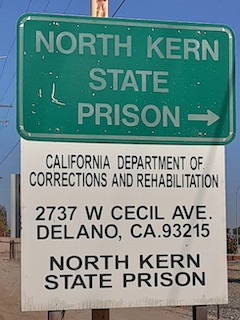 North Kern State Prison
If the error was committed by the sentencing judge or his or her clerk, we must go to court to have the judge (or his clerk) recalculate the number of days the person served in pre-sentence custody. This can be harder than it may sound, as the person may be held on probation violations and the date probation is revoked is important to clarify. There also may be multiple consolidated cases being heard in one courtroom.
If the error is discovered within 120 days of sentencing, the sentencing judge retains power on its own under Penal Code § 1170(d) to recall the sentence and issue a new sentence with more accurate, correct credits.
It is quite common for the sentencing error to be discovered while an attorney is simultaneously working on a direct appeal. If this is the case, the error in presentence credits can be raised as part of the direct appeal. See, e.g., People v. Acosta (1996) 48 Cal. App. 4th 411, 421-422, 55 Cal. Rptr. 2d 675; but see Penal Code 1237.1 (direct appeal of pre-sentence credit error may not be brought unless inmate brings claim to trial court first) (so bring up the issue via an informal letter request to the trial court first).
If the 120 days has passed and the time for a direct appeal has also expired, and if the sentencing court does not respond to an informal request for a correction, or if the sentencing correction claim depends upon information not previously presented to the judge, the only option is to file a state-court petition for writ of habeas corpus. Such a petition has no deadline for filing, but it should be presented without delay once the error is discovered.
As to corrections of errors from the sentencing court, it is good to know that even after a person is released on parole, the error really is not moot because any additional credits that can be awarded by the court may be applied to reduce the parole or PRCS period. See, e.g., People v. Goodson (1990) 226 Cal. App. 3d 277, 280 n2, 277 Cal. Rptr. 60.
If the CDCR appears to be responsible for an error in custody credits, a CDCR administrative appeal must be brought by a CDCR Form 602. The form allows one to explain why the person believes there is an error and to ask that the release date be corrected.
If the first appeal is denied and the person pursues a release date computation administrative appeal to the second level of review, the CDCR must conduct a Computation Review Hearing. 15 C.C.R. § 3084.7. This type of hearing is sometimes called a Haygood hearing (Haygood v. Younger (9th Cir. 1985) 769 F.2d 1350; Alexander v. Perrill (9th Cir. 1990) 916 F.2d 1392. Haygood, supra, held that the federal constitutional guarantee of due process requires the CDCR to investigate claims related to release date and credit errors and hold an informal hearing when a person challenges the computation of their release date.
If the CDCR states that it is following the order of the court on the matter, the person may need to pursue relief from the court, even through a state court petition for writ of habeas corpus.
For more information about custody credit issues, please click on the following articles:
 Greg Hill & Associates Home















 CDCR Emblem
 Your Privacy Choices Cookie Policy Manage Cookies