The BOPH found that Torres was eligible for compassionate release under § 1170(e) because he had terminal cancer. Board physicians determined he had less than six months to live (§ 1170(e)(2)(A)) and that he could be released without posting a threat to public safety (§ 1170(e)(2)(B)).
Torres then filed a motion for compassionate release in the Riverside County Superior Court in June 2019. In July 2019, the judge denied it, noting that it was undisputed that defendant’s physicians determined he had less than six months to live.
As to whether defendant would pose a danger to society if released, the judge found that it was a “close call” because elderly people in wheelchairs can still commit crimes, but “it would be a stretch to suggest that . . . he still poses a danger to society. The judge thus found he met the requirements for compassionate release".
 Centinela State Prison
Nonetheless, the judge concluded that whether to release defendant was “a discretionary call” because section 1170(e) indicates “that some people are going to die in prison,” which is “why the court is given discretion.” In the trial court’s view, defendant was “not a nice person,” “a brutal person,” and “as far as expressing serious remorse . . . he came late to this party.” Based on this, the judge denied defendant’s motion “because of his extraordinarily violent nature and because of his extraordinarily callous behavior, and I find that his comments of remorse are basically when he was on death’s door.” The judge went on to comment that some people deserve compassionate release and “some of them don’t. It’s not mandatory, which means, I have to differentiate between those folks. Not this person.”
Mr. Torres appealed the ruling to the Fourth Appellate District in Riverside, arguing that the trial court judge abused his discretion. The Fourth District agreed, reversing the trial court. The appellate court explained that “the trial court’s discretion is not unfettered when evidence is presented satisfying 1170(e)(2)’s criteria.” People v. Loper (2015) 60 Cal.4th 1155, at 1161, fn 3.
The appellate court then found that the trial court judge’s denial of release based on the nature of the offense and the lack of remorse was an abuse of discretion. These were impermissible factors to consider.
The appellate court then remanded the matter to the trial court with an order directing the trial court judge to grant the motion and to re-sentence defendant or recall his sentence.
We consider this ruling quite significant in that the appellate court seems to say certain factors about defendant cannot be considered by the judge in his discretion. What factors then can the court consider if the doctors opine that defendant has less than six months to live and does not pose a danger to public safety? We believe there really are no other factors to consider unless the judge is to second-guess the public safety analysis of the doctors, which would probably also be considered an abuse of discretion. In other words, it appears, the BOPH recommendation appears to be binding on the judge, which may be good given the circumstances of a dying prisoner’s request to leave prison before passing away.
The citation for the Fourth Appellate District Court ruling discussed above is People v. Tony Flores Torres (4th App. Dist., 2020) 48 Cal. App. 5th 550, 261 Cal. Rptr. 3d 844.
For more information compassionate release and other post-conviciton relief options, please click on the following articles:
 Greg Hill & Associates Home















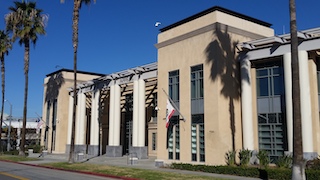 4th Appellate District Division 2 Riverside
 Your Privacy Choices Cookie Policy Manage Cookies