In the City of South El Monte, Phillip Kilgore owned and operated the Lavender Massage Center. He had owned and operated it since 2013. While he initially ran the business under a series of City licenses, in July 2017, the City approved a conditional use permit (“CUP”) for his massage establishment. The CUP set out a series of extensive conditions, including hours of operation, the qualifications of employees, limits on altering the interiors of the building and that Killgore “must allow two inspections a year . . . to ensure compliance with all conditions of approval.”
The CUP also referenced California’s Massage Therapy Act, a comprehensive certification and regulatory scheme adopted in 2014 that authorizes local governments to establish their own regulations. California Business & Professions Code §§ 4600 – 4621. The act allows local governments the power to “manage [massage] establishments in the best interests of the individual community.”
 Massage Sign in Window
In 2015, the City of South El Monte enacted Ordinance No. 1195 governing massage establishments. Its purpose was “to better control illicit operations and promote the public health, safety and welfare by imposing stricter requirements on massage practitioners, therapists and establishments.”
In August 2017, law enforcement sent in an undercover officer as a patron. The officer claimed he was propositioned for sex and a search warrant was executed on the business. According to Kilgore, City officials entered Lavender Massage on three separate occasions without consent or a court order and searched non-public areas for violations of the CUP. Although no criminal case was filed, the City eventually revoked Killgore’s CUP for multiple violations of the Massage Therapy Act and the City of South El Monte Ordinance No. 1195.
Killgore then filed a federal lawsuit under 42 U.S.C. § 1983 against the City of South El Monte, claiming it violated his Fourth Amendment rights when authorities, without a warrant, searched his massage business. Killgore’s main argument was that the U.S. Supreme Court’s decision in City of Los Angeles v. Patel (2015) 576 U.S. 409, which refused to extend the “closely regulated” industry doctrine to hotels, fundamentally altered a long line of “closely regulate” industry cases.
Judge Steven V. Wilson of the United States District Court for the Central District of California dismissed the complaint for failure to state a claim. It rejected Killgore’s Patel argument.
Killgore then appealed to the U.S. Ninth Circuit Court of Appeals in Pasadena, which affirmed Wilson’s ruling. The Ninth Circuit found that the massage industry in California qualified as a “closely regulated” industry, meaning that the Fourth Amendment warrantless search exception for administrative searches of businesses applied.
It explained that the massage industry had over 30 years of close government regulation and therefore, Killgore had no reasonable expectation of privacy. Barlow’s, Inc., supra, 436 U.S. at 313.
The citation for the U.S. Court of Appeals for the Ninth Circuit ruling discussed above is Phillip Kilgore v. City of South El Monte (9th Cir., 2021) ___ F. 3d ___.
For more information about exceptions to the Fourth Amendment, please click on the following articles:
 Greg Hill & Associates Home















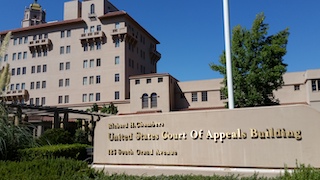 U.S. Ninth Circuit Court of Appeals Pasadena
 Your Privacy Choices Cookie Policy Manage Cookies